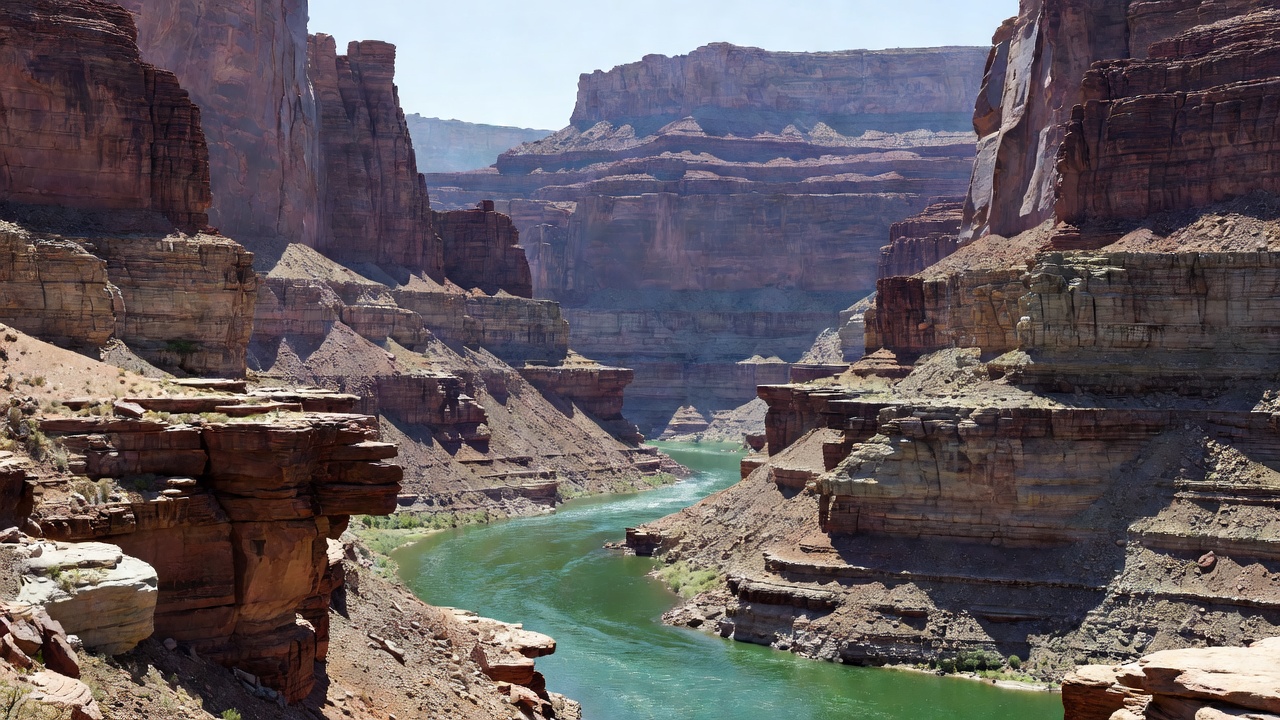
Find a channel before telling a story
From a safe overlook, trace the lowest connected route through the landscape. A canyon channel may contain flowing water, isolated pools or only dry sediment. Its present appearance is a snapshot, not a measure of everything it has transported. Look for tributary junctions, gravel bars, bedrock steps and bends. These observations help you describe the drainage before deciding which events made it.
Water moves downhill under gravity. Where it has sufficient energy, it can entrain sediment and erode its bed. Sand and gravel carried by the flow can abrade rock; hydraulic forces can loosen blocks along existing weaknesses. Dissolution also matters where minerals are soluble. The balance varies with discharge, channel gradient, sediment supply and the properties of the bedrock.
Separate incision from widening
Incision is downward erosion of a channel. Canyon widening involves additional processes on the walls: weathering, rockfall, landslides and runoff from smaller drainages. A river does not need to scrape every part of a canyon wall directly. It can remove material delivered from above, allowing slopes to keep retreating. Resistant beds may remain as cliffs while weaker layers form recesses or gentler slopes.
Weathering weakens rock in place, while erosion removes material. Salt crystallization, temperature changes, chemical alteration and, where conditions permit, freezing water can contribute to breakdown. Do not assume that a single mechanism explains every hollow or broken surface. A close inspection of the rock and its local environment is more informative than a familiar label.
Read a sequence, not a stopwatch
- Deposition and rock formation. Sediment accumulates and may later become sedimentary rock.
- Changing relief and drainage. Uplift, regional tilting and changes in downstream level can alter river gradients.
- Incision and slope retreat. Channels cut while weathering and gravity reshape adjoining walls.
- Continued adjustment. Floods, sediment pulses and shifting climate keep modifying the system.
This sequence is a teaching framework, not a universal timetable. Processes overlap, and rivers can inherit parts of older drainage systems. The Colorado River and Grand Canyon illustrate why regional context matters: ancient rocks are exposed by a much younger canyon system, and the development of individual canyon segments remains a subject of research. Rock age and landform age are different questions.
Notice what flash floods leave behind
A dry wash can receive dangerous runoff from rain falling beyond your view. Fresh sediment draped around plants, stranded woody debris and recently rearranged bars may record high flows, but none guarantees that a channel is safe now. Never enter a narrow canyon on the strength of clear skies overhead. Check the relevant land manager’s weather guidance, closures and route information before setting out.
Slot canyons, including those in the Page area, show how concentrated flow can exploit joints and sculpt narrow passages through sandstone. Their smooth curves do not mean the rock is soft everywhere, nor do they demonstrate that wind was the main excavating agent. Fracture patterns, repeated floods and sediment-bearing water work together, while local conditions determine the details.
Build a useful field record
Make one broad photograph showing the drainage and a second showing a specific relationship: a tributary entering the main channel, a resistant ledge or a sediment deposit resting against bedrock. Note your viewpoint, recent weather if known and the scale of the feature. Use cautious language: “consistent with transported gravel” says more honestly what you know than an unsupported claim about a particular flood.
At Zion National Park, Canyonlands National Park and Grand Canyon National Park, compare your observations with official geological interpretation rather than transferring one park’s explanation to another. Different rock units and drainage histories produce different forms. The most productive question is often not “How old is this canyon?” but “Which visible relationship could help test the explanation I am considering?”